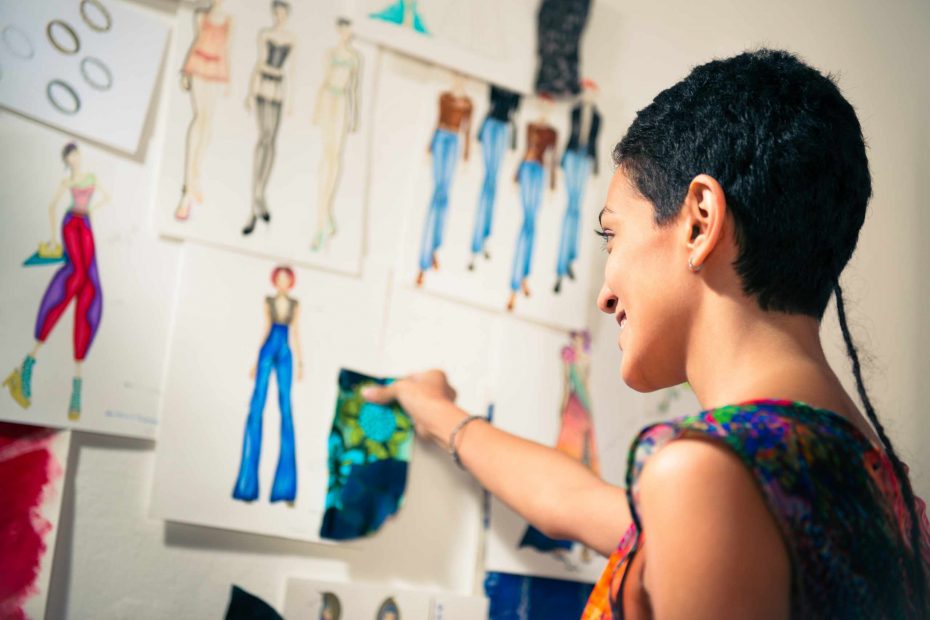
Sketch the outline of a blouse next to two different fabric choices: cotton and viscose. If both sketches use the exact same lines, they represent two very different garments. One will read as more refined, with better structure, whereas the other will read as more delicate and softer, more likely to stick closer to the body. This is why fabric drape is important in clothing design right from the start, rather than simply at the end of a sketch.
Drape defines the way in which fabric falls, creases and moves through space. A stiffer drape allows a sleeve to hang better, the bottom of a hem to be straighter, and the garment silhouette itself to be wider. A softer drape causes the fabric to hang more naturally into folds, and a more relaxed version of the same silhouette is the result. Beginners who ignore drape often make drawings that convey one silhouette, but that the resulting choice of fabric turns into another silhouette. A loose sleeve cut in stiff denim and a loose sleeve cut in a lightweight rayon, for instance, will hang differently.
Prior to coloring in a design or adding trim, add a fabric note alongside the sketch, whether that note is light and fluid, medium weight and crisp, soft and flexible, or heavy and structured. This step helps give a garment concept more dimension and gives the designer something physical to consider when thinking about the neckline, sleeve shape, seam lines and hem line. While a soft, drapey material might be best suited for gathers or soft pleating, a heavier material might call for less pleats and smoother lines.
One problem that a beginner may face when designing is a design that looks very voluminous in the sketch but the fabric choice has too little drape to support such volume. Structured garments such as a structured collar, sculpted sleeve, or A-line skirt, for example, typically require a body of fabric. Another problem a beginner may face is the reverse: a design that is intended to look loose and draping being paired with a heavy, more stiff fabric, making the garment look cumbersome or ill-fitting. Being able to recognize these potential issues is easiest if done before any design details begin to clutter a sketch.
To help test this principle out, try grabbing a small scrap of fabric that you have on hand or find a fabric swatch. Hold the scrap of fabric by one corner and notice the way the fabric hangs. Does it hang completely flat, soft wave creases, stretch back into a tight shape, or create sharp creases when folded? Take a look at a sketch and evaluate whether that type of fabric drape supports the shape of the garment being designed. This does not necessarily require advanced knowledge in sewing; what it does do is train your eye to evaluate the relationship between drawn shapes and potential materials that could support that shape.
Drape also plays a role in the way that design details show on a garment. A pocket detail that is too large may be weighed down by a thin fabric, causing the pocket to sag. Pleating in a stiff cotton fabric will give a crisp appearance, while that same design in a very soft knit fabric will look a little softer. A zipper might be the best option to keep a straight seam in the front of a garment, while small buttons might be the best way to add a lighter touch to a blouse. Even embellishment needs to be considered in relation to the fabric itself. A heavy trim detail will cause a soft fabric at the hem to droop, while a small detail might get lost in thick fabric.
One metric for success to look for in improving sketching skills includes seeing fewer random details in a sketch and more evidence of material logic. In other words, when designing a sleeve for a garment it shouldn’t be selected simply because it looks interesting, but because it could also be constructed from a material that would hold that shape. When looking at different fabrics to choose for a specific garment length, fit, and movement, it shouldn’t just be chosen based on color, but based on whether that fabric drape works to support that design. The drawing then becomes less of a flat image, and more of a clothing concept with weight, drape and movement.