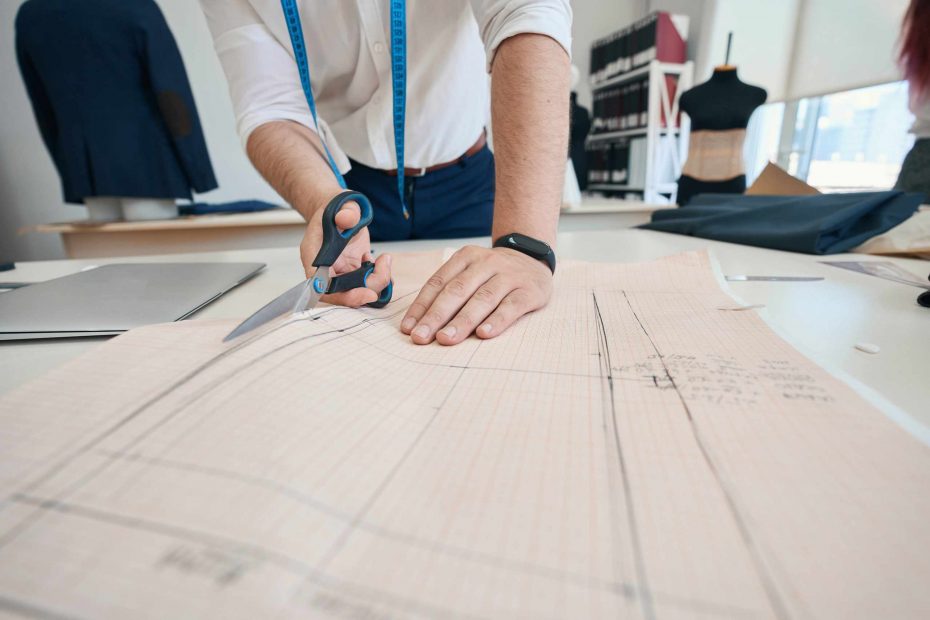
Designing a garment can be exciting and daunting at the same time. Often, you might have buttons, pockets, topstitching, an exaggerated sleeve, or a bold colorway in your head before you even have the garment silhouette in mind. In the clothing design world, this can cause your sketch to look unclear and complicated. A great place to start is to establish the silhouette first, because the silhouette explains what the garment is doing before the detail is added.
The silhouette is the outer shape of the garment, or in the case of a garment design, the outer shape you are designing. It’s length, width, shoulders, waist, sleeves, and hemline. A fitted pencil skirt, an oversized jacket, a flare skirt, and a straight shirt can all be simple shapes on paper, but each will look and behave differently. Before thinking about trims and colorway, think about what kind of look you want your shape to have. Is it soft and feminine, boxy and structured, oversized, or a close-fitting bodice?
An easy exercise is to try out three different silhouettes. Using a basic form pattern or a light pencil sketch, start with your design but leave the details out. If you want to create a jacket, create one short and boxy, one long and straight, and one with a fitted waist, but without pockets, buttons, or seam details. Check the shoulders, the length, the amount of sleeve ease, and where the hem sits. Notice how much the look of the whole design changes by the shape.
A common mistake in design is filling the interior of the drawing to hide uncertainty or a weak silhouette. You may add pleats, extra detail trims, pockets, zip fastenings, and contrasting color blocks because the main shape of the design isn’t yet feeling strong. More detail rarely solves an unclear silhouette problem. Instead, you’re adding confusion and clutter that makes your design idea look busy without a clear indication of the fit or the movement of the garment. If that is the case, close your sketch and hold your sketch up to a light or cover the inner details with your hand to just check the shape. If the silhouette is still unclear, your design needs work on its shape, not the detail work.
Fabric is also dictated by the silhouette. A structured jacket may need something stiffer to hold its shape at a sharp sleeve point or in a pleat, while a drapey jersey or silk may hang better with a soft bodice or a flare skirt. Fabric stretch may provide a better fit, but that changes the way your seam and body measurements will sit. Even at the sketch stage, add a note on the material. Just words like a cotton poplin, a knit, a linen, heavy denim, or a soft satin can remind you how your design and fabric can work together.
With a strong and clear silhouette, you can start to add in any details that enhance your shape. Maybe a long, straight coat just needs a simple closure detail and pocket placement. Maybe a flare skirt needs seams to define its fullness. Maybe a floaty top just needs a neck shape that can hold the material and sleeves that match its material quality. It’s not about removing the individuality of your design, it’s about making sure that every detail works to your advantage.
One good way to check your design is to describe it in one phrase without first talking about the details. “My design is a loose-fitting, hip length jacket with a boxy shape and medium weight material.” If that statement holds up true, then adding button types, trims, your color palette, and seam finishes will be more powerful. When you have done that, your drawing becomes much easier to modify because you already have something that you know is working, so you know the details that are crucial and those that are up for change.