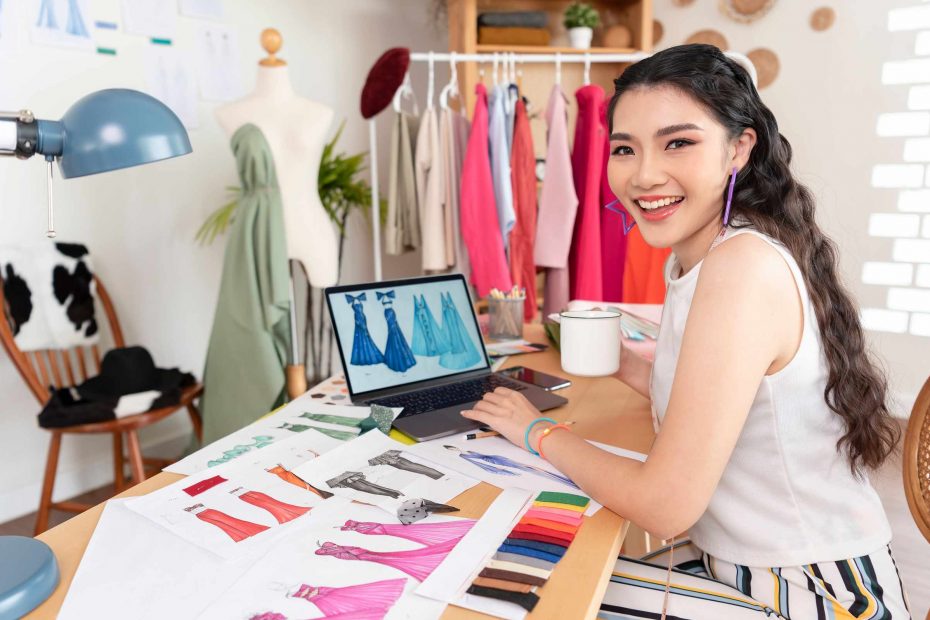
Mood boards tend to get cluttered easily. You add one fabric photo, one runway photo, one color that you like, one sleeve detail, one pocket idea, and soon the mood board becomes “full” without adding value. For a first clothing design idea, it’s often better to have a smaller board. A smaller board should be a resource for decision making, rather than a collection of all the pictures that you find beautiful.
In short, the mood board acts as a filter and narrows the style direction, before you create multiple versions of the garment design. A useful mood board for a first clothing design idea can have: a color palette, one or two fabric references, one silhouette idea, one detail reference, plus maybe one or two sentences that explain the purpose of the garment design (a jacket designed for comfortable everyday layering; a summery blouse designed to hang loosely against the body; a fitted knee-length skirt designed for an office environment). Why is this helpful? Because the design requirements for each piece of clothing are likely to be very different (a loose everyday jacket and a fitted work skirt may be designed in the same color palette, but will otherwise likely differ in material choices, silhouette, and design details).
For a first clothing design idea, start by describing the garment design purpose in plain language rather than pictures. You may be able to do this quickly in your notebook. For example, your idea may be: “I want to design a comfortable hip length jacket designed to be worn for everyday layering” or “I want to design a light blouse designed to have soft drape and simple long sleeves.” This description of garment purpose is the centre piece of your mood board. When adding images to the board, you can ask: Does this image support the garment description? You may find that some images just “look beautiful” but don’t add anything to the garment idea (save this image for another mood board instead).
Another aspect that is easier to limit is color. Rather than including a range of colors, choose a primary color, a secondary (support) color, and a quiet neutral tone. You can add an accent color later if needed, as adding too many “loud” colors to a mood board will often make it difficult for you to create a well balanced fashion illustration. Place the selected colors beside the fabric idea and check to see if the color and fabric go together. A pale cream color for a heavy wool coat will create a much more formal feeling than a pale cream soft knitted blouse. Both the color and the fabric choice should support one another.
Fabric references on a mood board do not need to be perfect fabric swatches at this stage. An internet photo of denim fabric, cotton poplin fabric, rib knit fabric, linen fabric, satin fabric, or even a textured woven fabric may be good enough. Add simple descriptive words beside the fabric reference (crisp, soft, stretchy, heavy, sheery, smooth, textured) to help you remember the characteristics of the fabric choice you want to use when you start drafting the neck and hem line shapes, sleeve and pocket placements, and seam line positions. Without these fabric characteristics added to the board, the mood board can “look beautiful” yet fail to help you decide on garment design.
One of the common difficulties with mood boards is including reference photos that do not belong to the same garment. For example, an evening garment sleeve detail, a sporty garment zipper detail, a pretty floral fabric, and a work wear garment pocket detail can all look great on a mood board, but these images can easily cause your mood board to pull your design idea in four different directions. Rather than asking yourself “which picture do I like the best” try asking yourself “which image helps my garment idea become clearer?” Remember that your mood board may not always be the most beautiful one to look at, but a strong mood board makes it easier for you to make your next garment design choice.
Finally, check the mood board against the garment design itself, before beginning the fashion illustration. Does the silhouette match the fabric choice? Does the color palette support the garment purpose? Does the detail reference match the neckline, pocket placement, closure, and hem line? Remove one item from the board, if you think the board is too full. The mood board is ready when you can look at the pictures and explain the garment idea without changing the direction halfway through your explanation.